If you have a passion for everything paranormal and want to become a paranormal investigator, there are more things to consider than the latest recording equipment or investigative tools. No, you also need to consider the legal problems you could encounter as a paranormal investigator. What kind of legal problems can I face as a paranormal investigator, you may ask? Well, we are about to disclose the legal pitfalls of the profession!
Trespassing Is One Of The Main Legal Problems For Paranormal Teams
One common problem that paranormal investigators often forget about is trespassing. There may be an alleged haunted building in the neighborhood you want to check out, but have you thought about the owner of that particular building? Or has the building been cordoned off because it is unsafe to enter?
Some buildings are associated with local legends, so they are a prime location for paranormal investigators to visit. Unfortunately, some of those buildings can be really unsafe. Even though there may not be anyone inside – or even if the site has been abandoned for years – it does not give you the right to enter the building.
Before you go into any building, home or property, always make sure you have permission to do so. If you do not know the owner of the building, you can head to your local city hall for additional information. In some cases, special permission may be required before you will be able to conduct your investigation safely and legally.
Property Damage On Location
Property damage is another liability you may encounter while you work as a paranormal investigator. For example, a client could ask you to check out a building they own for paranormal activity. Several weeks after you have completed your work, the client can slap you with a lawsuit claiming you have damaged their property. While this is a “he said, she said” situation, you always have to take that possibility into consideration.
Since you can enter someone else’s property during an investigation, it can be a good idea to have a legal document drafted up that ensures you are not liable for damages. Of course, this must be within reason. For example, the document can specify that you will not cause damage to the building and that you cannot be held liable for any damages that are already present. As such, it can be a good idea to take some photographs of the building’s interior and exterior before you bring in any equipment. You may need permission from the owner to take these photographs as well.
Some investigations may require digging or other actions. If this is necessary, then you must have a consent form from the owner of the building. If you don’t have such a consent form, you may be liable for the damages caused by digging, tunneling, or any other actions performed by you during the investigation.
Emotional Distress
You may be surprised just how many legal problems you can encounter as a paranormal investigator and emotional distress is certainly one. For example, a client may claim that your investigation has caused them significant emotional distress. After which, the person in question may deem it necessary to sue you for damages. Therefore, make sure that this particular issue is covered in the legal document you draft for all your clients.
Professional Legal Advice Can Help
Help Lawyer
Now that we have mentioned some issues you can encounter, it is important to get appropriate legal advice before you start your journey as a paranormal investigator. While most people you meet won’t have bad intentions towards you, there is a small percentage that looks to profit from your sheer presence. So, get a legal document drafted by a professional lawyer or law firm and ensure you are covered when someone uses your investigative services. You may also want to look at certain types of insurance, which provide added protection for property damage and other legal problems you could encounter. At the end of the day, good preparation makes all the difference.
Over the last few years, there has been a dramatic upsurgence in claims of Demonic Possession. Whilst some may have a valid issue that may not be explainable by medical science. There is a grave reaction to label all imbalances of the psyche, or emotions as a spiritual issue such as Demoniacal possession. This is the thin, grey, paranormal line that is tread by ignorance and fools. All too often there will be medical professionals, religious practitioners, paranormal groups and clergy that will be too quick to jump and label something as demonic or of an other worldly influence.
Yoga Is Not demonic
Reiki Is Not Demonic
Healing Is Not Demonic
Bad Moods are not Demonic
Depression Is Not Demonic
Mindfulness Is Not Demonic
and so on!
Neither do any of these cause Demonic Possession. That cause and effect lies squarely at the feet of man and the choices made.
Psychology Of Demonic Possession
Granted, there are many symptoms of Demonic influence that mimic that of a medical problem, such as a psychological imbalance or of course a psychiatric issue. However, there are many clear distinctions which separate the preternatural from the natural one. An emotional issue of anger, depression, and violent outbursts do not necessarily mean one is possessed, and there is a need for a paranormal investigator, team or priest. A cold spot that chills you to the bone may have another plausible explanations, as do some other issues, such as seeing visions or of course hearing a voice.
These are all valid issues within the medical professions that do have a psychological basis for explanation. Many people who are more spiritually minded will often look for an excuse of behavior in order to blame a preternatural force. Dr Graham C.L. Davey Ph.D. alludes to this on his article featured in Psychology Today. In this regard, many spiritualists, even medical professionals, and of course clergy, are those who believe in something more sinister or preternatural. They will shout claims of demonic influence or spirit obsession. However, we have gotten away from the real clear division of phenomena versus another form of pareidolia.
Image: Canva
Spirit Obsession
Spirit Obsession can of course be the influence of one or more spirit entities. However, this is not Demonic. It is not an archetypal demon of a higher order. Spirits can and do influence our lives – especially those of a weaker disposition. It is not an excuse for bad behavior or emotional imbalance brought on by external trauma. We must not mix the two and instantly use excuses of evil influence.
Consequently; many mental illnesses do have some roots in spiritual imbalance and that issue should not be overlooked when looking at mental illness that may have entered someone's life. And there are many cases of where spiritual help has indeed negated that need for medical intervention. Again, this is not a Demonic problem.
There Is A Clear Division From Demon Possession Or Oppression and Psychological Imbalance
Someone is levitating with no possible scientific explanation. Perhaps they are changing in appearance and shouting blasphemy all whilst physical manifestations are going on around you. Emanating putrid smells or bodily fluids and excrement, not to mention that feeling of foreboding and evil that is projected to the sensitive or even non-sensitive individual. There would also be external manifestations of phenomena experienced in the immediate environment, and perhaps even phenomena that is directed in a highly intelligent and deliberate way. Then, of course, one must begin to look at possible paranormal or imbalanced spiritual causation as a point of serious enquiry.
The Need For Discernment On Both Sides Of The Coin
One cannot be successful without the other. One cog won't turn on its own. There has to be a relationship between something as equal in make up and force. Both of these aspects working in unison – bring about the successful movement of the cog that may then have a positive effect on the other. It is time that professionals such as the scientific, medical and spiritual community work together. Each has their own level of discernment. Whilst one aspect may work in the material plain, it is evident that there is a great gap within the non physical plain of existence and this is where perhaps the use of real mediums or those with the power of spiritual discernment should be used as the bridge between the physical, non-physical and religious.
Making False Claims Opens The Box
There are two clear dangers that one can look at as a possibility. The first is making a false diagnosis of demon influence, or possession, and that must be taken seriously. The second is to consider how much suffering it would cause to the inflicted. This could be an individual or a family, and diagnosing something as Demoniacal may cause more anxiety, and suffering.
On the other side of the coin, you have to consider the real danger of becoming the catalyst for real infestation. You have now become one of the causing factors, and you will now have to pay the price either by directly being in the line of danger or of course allowing mother Karma to pay you a visit.
The Reality
Demonic possession is real. Spiritual obsession is real, but so are psychological imbalances, mental illness and of course forms of psychosis. It is therefore important that medical professionals begin to look toward working with professionals that are highly experienced in the spiritual field. Also, working with professional paranormal investigators that consider all avenues of the preternatural as the natural. It is a far too dangerous field that should not be frequented by less experienced, ego-driven individuals, pr groups that can leave a trail of destruction in their wake, making the thin grey line of Demoniacal Possession a reality.
Let’s face it anything regarding the paranormal or the unexplained is compulsive, which might go a way towards explaining the current Ghost Hunting mania. Trust me, I’m with you on this. Ironically seeking the truth for evidence of continued survival is my raison d'être. Ghost Hunting TV shows and Paranormal YouTube channels are increasing with daily popularity. Investigators all over social media are poking around in the dark with EMF meters and Rem Pods. They can be found in just about every abandoned, derelict building or spooky location around the globe. Many die-hard fans also get the good fortune to join TV presenters on weekend investigations. Judging by the popularity, these regular events must be quite lucrative.
Exorcists.. Coincidence, cause or effect?
But, have you also noticed, intriguingly, an increase in ‘Celebrity Exorcists’? Some even have their own Twitter accounts! Is this mere coincidence or cause or effect? Has ghos hunting gone mad?
The Paranormal Investigator
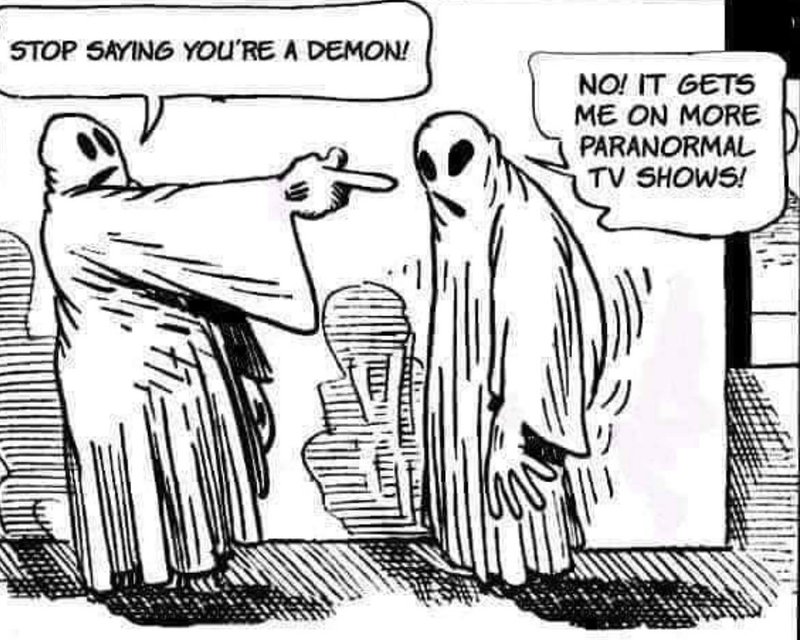
Underneath the black baggy T-shirt, baseball cap and arms full of skull tattoos, you will find The Paranormal Investigator.. he’s muscly, rufty-tufty and out there looking for Demons. Hang on a minute…what seriously? Demons?!!!
Demons
This has always been a big eyebrow-raiser concerning the whole crazy, ghost-hunting circus. Why are paranormal investigators only seeking danger, evil spirits and demons? Is this just a fear-based adrenaline kick or is there a hungrier, deeper desire for fortune and fame? Perhaps because of the essence of paranormal investigations in a dark, supposedly haunted location or cemetery the paranormal investigators are subconsciously already at that level where the only encounters are sure to be of a malevolent nature?
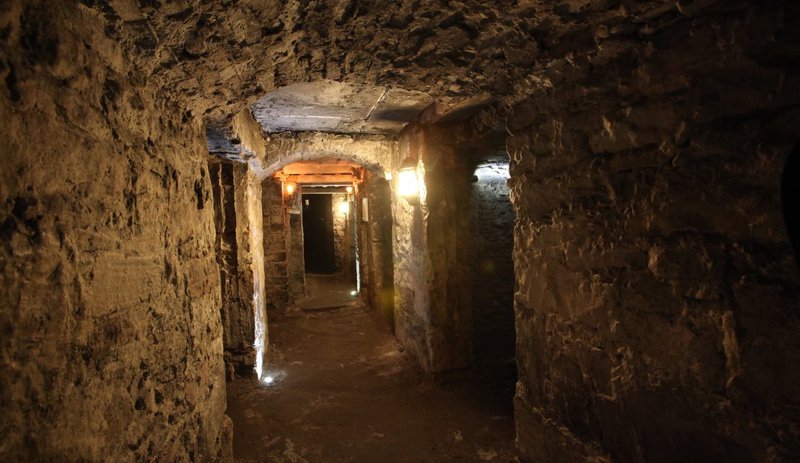
Edinburgh Vaults
Phantom Finders
Kate from the ‘Phantom Finders’ team recently found unexplained bruising after a night out at The Edinburgh Vaults, home to the resident evil spirit, “Mr Boots”.
“A couple of weeks ago I visited Edinburgh Vaults. I'd never been here before and to be honest I knew very little about it. I knew it was underground so it might be a little bit eerie and that there must be some sort of activity down there. We entered the 'double height room', the guide was stood at one end telling us about the people who would have lived down there and I was right at the back, the room was very dark, lit by candlelight.
I thought someone was behind me so I turned to see who it was as I was going to apologize for standing right in front of them. There was nobody there but it felt like there was, so I took a photo of the corner of the room and on my phone the little circle appeared for facial recognition which I thought was pretty weird… Anyway, fast forward to later on, we're back upstairs, reading the information board in the exhibition room. Apparently, Edinburgh Vaults are one of the most haunted places in all of Britain and there is a man who reportedly stands in the corner of the double height room and points and laughs at people, this man is known as Mr Boots. Creepy! People have been known to leave the vaults with unexplained bruises and scratches.”
What next?
Judging by the growing numbers in these cases, reported A class EVPs, SB7 spirit box communications of growling intent, Ouija board Zozo sessions, cold spots, oppressive atmospheres and being pushed in the dark, let’s assume that you have indeed really found a baddie. What next? Do you really want your life turned upside down by unseen forces?
Rather than brandishing your demonic bruises and scratches as medals of honor all over social media perhaps it’s worth considering if this was a demon communicating with you, what did it actually want?
Apparently by all accounts what Demons want is not the greatest…
They want to incite spiritual warfare, kill, destroy, murder, lie, confuse you, keep you from discovering the truth and will accuse you of things you have not done. They can leave you feeling truly suicidal and destructive. As far as most paranormal teams are concerned this might be a bit of a conversation killer, but isn’t the risk quite a high price to pay for a few YouTube subscribers?
The paranormal frenzy is pretty much focused within the West. People in the East are a lot more generally accepting and respectful of spirituality and the dangers and thus seem quicker to recognize demonic activity. Hindus often credit bad luck or circumstances to evil. In Japanese culture it’s not unusual to light bonfires or lanterns in respect and send the dead back to where they came from. Buddhists will keep a little spirit house and make offerings of food and water, whilst we in the West are divided by looking for rational explanations, scientific or perhaps mental health to attribute, which can make obsession and possession more difficult to recognize.
So if this war is real, would you go out to war un-armed?
The likes of Gary Galka and Bill Chappell should be applauded for their often ground breaking inventions. Gary’s heart-breaking loss of his own, beautiful teenage daughter Mel, led to him to develop communication methods with her, which is truly inspirational and pioneering! However the primary problem in the war against evil may not be what cool gadgets we have within our armory, but what strength of discernment we have within ourselves.
Discernment
By definition discernment is the ability to judge well – Judgement, enlightenment, sensitivity, subtlety and perceptiveness.
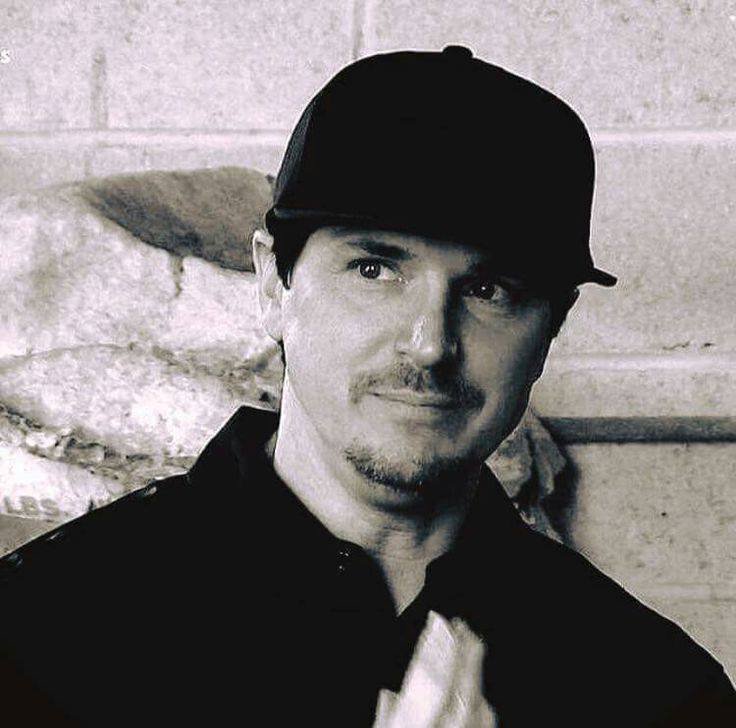
Zak Bagans.
Zak Bagans the lead investigator and presenter from the hit TV series Ghost Adventures, is a prominent example of developing discernment within the current paranormal field. When talking to biography.com he admitted to having a much healthier respect than he did when he first started investigating.
Along his journey he feels that he has developed his own ‘sixth sense’ and is now able to feel and channel the emotions from the spirits and their power. Zak likened this to the movie ‘Avatar’ when they connect their tails in to other creatures. He also recognizes that this can be very dangerous which could well indicate that he has truly encountered evil and the consequences of doing so. Recently, despite a four hour, Halloween episode held within Zak’s haunted museum he finally decided not to open the Dybbuk box, reportedly one of the most haunted objects in the world due to concerns for his health. One would hope the hype surrounding this was not merely for show ratings.
The great news is however, if you believe that demons or malevolent forces are out there, you must also be open to the possibility of the polar opposite. Thankfully anything of evil disposition is controlled by God and in his name can be commanded.
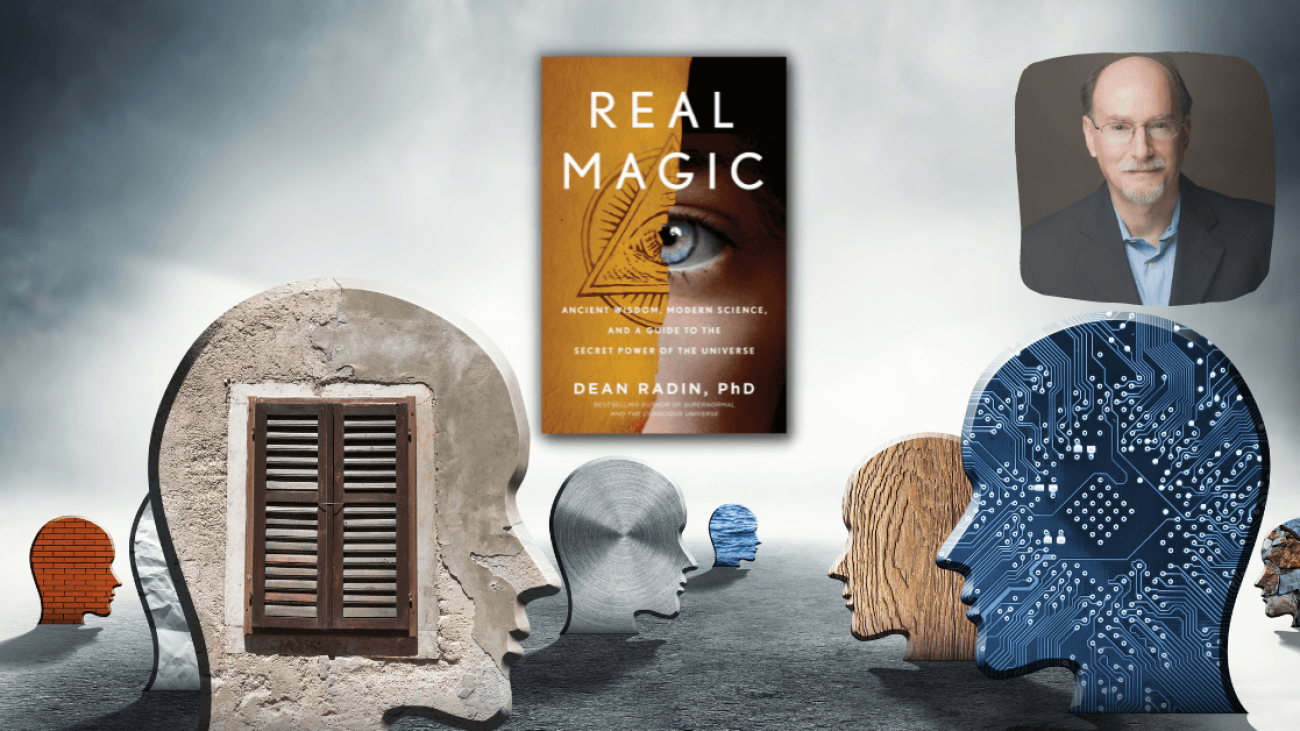
Since emerging from a colossal wombat hole brimming with closely guarded occult secrets from places most high, I felt called to learn more about the captivating but widely discredited world of magic. So began the task of searching for a good, old – fashioned, well crafted book with robust, natural immunity from censorship.
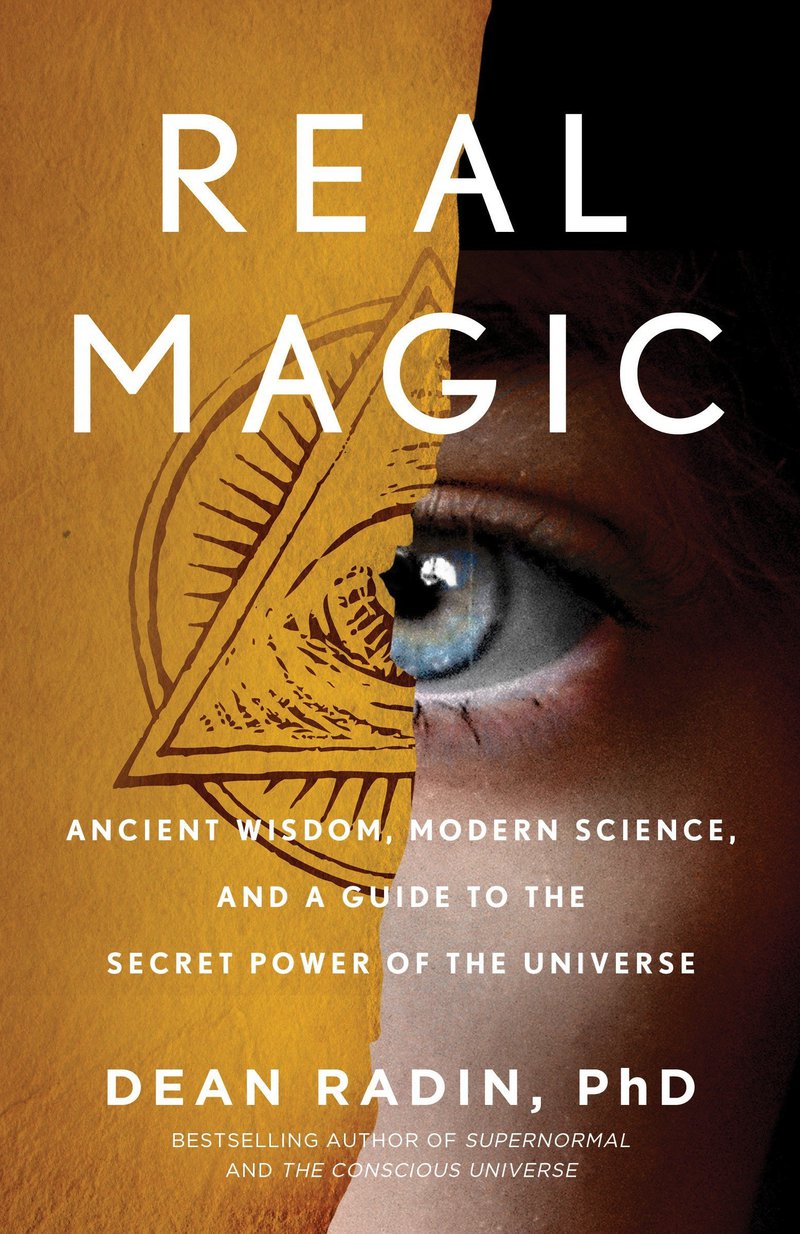
Browsing through dozens of listings in search of credibility and honed authorship, I settled for two books. One of which was Real Magic by Dean Radin PhD, best-selling author, chief scientist and associate psychology professor who spent the last forty years investigating the many facets of magic from a scientific perspective. His credentials also include a significant spell with Stargate, the US government’s top-secret psychic espionage program, and his work has been endorsed by the Nobel laureate in physics, Brian Josephson, PhD, as “A convincing case for the reality and significance of magic”. Sold.
Magic as a Forerunner of the Future of Science
Real Magic opens with a most unexpected wake-up call from the year 2915. A guest editorial in the New Seattle Province reports the discovery of a fragment of an ancient digitized file. The file appears to be an editorial from the defunct news service Galactica Today. My emotions move into mixmaster mode as Radin paints a rather bleak futuristic view of the “unintended consequences of popularizing neomagic, especially among youth”. it's potential to threaten the social order and even alter history is also of concern. One could point the same finger at some of our devilish secret society adults. However, who was I to question such a well – versed scientist?
Thankfully, the mixmaster effect is short — lived, and the real magic appears in Chapter 1, The Beginning. In his refreshingly on point style, Radin defines the three categories of magic: mental influence of the physical world (force of will); perception of events distant in space or time (divination); and interactions with nonphysical entities, (theurgy, from the Greek meaning ‘god work’). Being a daydream believer in magic for as long as I can remember, I applaud Radin’s confident stance about the reality and future of magic:
“There are rising trends in science suggesting that what was once called magic is poised to evolve into a new scientific discipline just as medieval astrology and alchemy evolved into today’s astronomy…it’s best to think of real magic not as something impossibly mysterious but as a forerunner of the future of science.”
Psi is Real Magic
Radin also shines an upfront light on the contentious discipline of parapsychology — the study of Psi (psychic phenomena), and provides scientific confirmation that Psi is real magic. When he draws attention to fictional movies where magic is often portrayed in negative terms as a struggle between the forces of good and evil, where good only wins occasionally. I am reminded of an interview with a spiritually minded Hollywood producer who described the top tier industry executives as self-appointed gods or gatekeepers who restrict screenwriters from giving too much away to the sleeping masses about the all powerful esoteric realms.
Radin also confirms that discussions from a neutral, scientific perspective are rare. Furthermore, he cites that a 2015 anthology about psi research entitled Parapsychology: A Handbook for the 21st Century, doesn’t even list the word magic in the index. As the perpetual wheel of ignorance keeps turning, he shares some amusing trade secrets about skeptical scientists that bear repeating:
“The upshot of the social taboo is that most academic scientists avoid parapsychology as though it’s a virulent strain of a zombie plague. If they’re secretly interested in Psi — and many are — they first swear everyone to secrecy, and then they approach it slowly while wearing a full hazmat suit, with multiple alibis set up in advance to provide plausible deniability.”
“Controversy invariably invites disagreements, but there’s something peculiar about Psi that seems to push otherwise calm, rational scientists beyond civil discourse and into rabid, foaming-at-the-mouth frenzies.”
A History of Suppression
Saving me many hours of research, subsequent chapters of Real Magic seamlessly move into the history and origins of magic. Unsurprisingly, the theme of suppression continues. Growing up with an innate knowing that magic is real, and minimal exposure to religious indoctrination, I am perplexed to learn that magic is fully accepted by the devoutly religious who perceive magic outside the confines of the church to be frighteningly demonic; religious faiths require an unwavering belief in magic, but many orthodox religions strictly ban magic, largely as a sociopolitical strategy; other religious faiths deem certain forms of magic are acceptable — but only for the priests.
“It would not do if infidels were allowed to worship anything not under the control of the proper ecclesiastic authorities” writes Radin, with his signature fluid grace. “Like any struggle for political power, gaining the allegiance of the masses is much easier by inciting fear of the “other” than by encouraging love and compassion.”
Holy, Holy, Holy
When Radin cites Catholic priests as being sanctioned to “perform the sacrament of the Eucharist, an explicitly magical transformation of bread and wine into the body and blood of Christ”. I naturally wonder what they do with the manifested ‘body and blood of Christ’ and if magician priests ever allow curious seekers to observe this ritual.
Addressing the topic of why academia is still so blinkered and prejudiced toward the world of magic; Radin explains that it boils down to the thorough marginalization of magic through to the late 20th century. Most religious scholars avoided talking about esoteric topics as though they didn’t exist, while anthropologists regarded magic as so idiotic that it was erased from the curriculum.
“…magic threatens sovereignty and transcends secrecy. Besides death and taxes, the one other universal truth is that bureaucracies never respond kindly to challenges to their authority. So, there’s enormous societal pressure to suppress the reality of magic.”
I am left pondering the hypocrisy within the upper echelon of secret societies — the self — appointed ‘ruling class’ that strives to keep magic all to themselves; materially wealthy lost souls whose covert dark occult rituals and the worship of demonic entities such as Moloch, the ancient pagan god of child sacrifice, only serve to harm humanity, and ultimately themselves. The responsible upper echelon magi need to take back the runaway magic reins sooner rather than later.
The Road to Scrupulously Willful Ignorance
Radin further explores the root cause of academic avoidance of esotericism and the “scrupulously willful ignorance” during the nineteenth and twentieth centuries. We meet German sociologist and philosopher Max Weber (1864-1920) who, in 1917, identified the “disenchantment of modern western society” and the growing conviction among scientists and scholars that there was no longer any need for mysterious incalculable forces, magic or spirits. They also decided that there was no need for institutions that relied on ideas such as religion.
Sadly, anthropologists whose frontline work exposed them to numerous magical beliefs and practices in other cultures, were too cowardly to defend the reality of magic. They instead chose to distinguish themselves from the “scientifically illiterate masses”, further degrading magic by ignorantly and arrogantly associating it with the beliefs of “savages” or “lower races”.
Oxford University’s first anthropology professor, Sir Edward Burnett Taylor (1832-1917), called magic a “monstrous farrago… one of the most pernicious delusions that ever vexed mankind… Belief in magic was due to the psychological need to cope with the uncertainties of life by gaining an illusory control over non-existent supernatural forces.” Small wonder then, that the mere idea of magic came to be regarded as an affront to science itself; a throwback to prescientific concepts.
The Early Sciences – Bravo Medici, Ficino and Mirandola
As we travel further back in time to the grassroots origins of magic, I relish every moment, from the Prehistoric Times through to the 14th – 17th century Renaissance, when translations of manuscripts long held in Arabic, Greek and Asian states were slowly reintroduced to western scholars.
Radin writes:
“Religious reformers such as Martin Luther challenged the rigid authority of the Catholic Church, its increasingly corrupt practices and monopoly in defining what Christian practice meant…As all structures began to crumble, the dust generated a heavy price in the form of nearly continuous conflicts. Fortunately, it also fostered a new intellectual openness that eventually allowed for the rediscovery of Hermeticism. Named after Hermes the son of Greek gods Zeus and Maia, hermetic cosmology contends that reality consists of a single Universal Consciousness known by many names: the One Mind, the Divine, the Tao, Brahman, Allah, God and so on.”
Hermeticism
Hermeticism was considered heretical by the church because it asserts that all humans have an inherent spark of divine power within us, or “God -like abilities” and that there were no special benefits conferred by following someone else’s dogma, because each of us could achieve enlightenment on our own. Radin writes: “As you may imagine such insolence was unacceptable, so the church applied its well-honed strategy for maintaining control and like Neoplatonism and Gnosticism, Hermeticism was forced to go underground.
Thankfully, Hermeticism was rediscovered in the 15th century largely due to the efforts of Prince Cosimo de Medici of Florence, Italy, after the Church’s stranglehold on scholarship began to loosen. He commissioned Marsilio Ficino, head of the Florentine Academy, to translate a set of 17 ancient manuscripts that were found in the Middle East. Ficino’s Corpus Hermeticum was published in 1471, igniting great excitement and debate among the scholars who were in the process of rediscovering the ancient Greek Egyptian and Jewish traditions.
Kabbalah Cosmology
One of Ficino’s students, Count Giovanni Pico della Mirandola (1463-1494,) later added portions of the Jewish Kabbalah (Hebrew word meaning “to receive”) to Hermeticism. The Kabbalah was an ancient cosmology based on sephiroth or spheres of “cosmic vibration” that connect the transcendent divine to the everyday world. Kabbalistic text known as the Sepher Yezirah (Book of the Creation) describes a cosmology that some scholars claim is identical to the Emerald Tablet which was one of several fascinating esoteric realms that I explored in 2020 during a research project.
To avoid the wrath of the Church, Ficino described his magical synthesis as the practical part of natural science and together with Mirandola’s fine work, sparked a flood of new combinations and syntheses of the esoteric traditions, many of which were instrumental in the development of the early sciences and rise of ‘magician-scientists’.
Of particular note were German scholar Heinrich Cornelius Agrippa (1486-1535) who authored De occulta philosophia (Occult Philosophy) in 1510; English mathematician John Dee (1527-1609), advisor to Queen Elizabeth I who combined natural sciences and magical evocations aimed at establishing contact with spirits; Italian mathematician, philosopher and friar Giordano Bruno (1548-1600), whose work proposed that the universe contained an infinite number of worlds inhabited by intelligent beings, but contradicted church dogma for which he paid the ultimate price; and Swiss physician Philipus Aureolus Theophrastus Bombastus von Hohenheim, better known as Paracelsus (1493-1541), one of the first modern medical theorists and founder of homeopathy who stressed that exercising the imagination was the beginning of all magical operations.
From Enlightenment to the Internet Age
Radin’s magical mystery tour continues with great fervour. Potential movie ideas dance through my mind – to hell with those gatekeepers. By the end of the 16th century, we see the formation of the Freemasons – a medieval guild of stonemasons who essentially follow the lead of the 12th century Knights Templar. Adopting hermetic symbolism and lore, they became an important forerunner for future esoteric organisations. (From what I learned about the influence of Freemasonry in the political and religious spheres, there is need of serious and urgent reform within this vast, unruly secret society that is allegedly answers to the Vatican.)
Occultists of all persuasions, please take note: “Within the magical worldview, everything is deeply interconnected, so if you intend to harm others, you are likely to end up harming yourself. This is not just because of a guilty conscience but more like Newton’s third law: for every action there’s an equal and opposite reaction. Let’s just say it would be exceedingly prudent to avoid black magic.”
Newtonian Values
On a brighter note, Radin reveals that the single most famous scientist of the day, Sir Isaac Newton (1642-1727), also played a key role in the history of esotericism. This was far from public knowledge until 1936 when economist John Maynard Keynes bought Newton’s personal papers and discovered that earlier biographies of Newton as the “idealized scientist”, left out the majority of what he was really interested in – alchemy and esotericism. Referred to as “the last of the magicians”, Newton owned one of the extensive collections of alchemy in his day.
Other notables from this era and whose books are still on bookshop shelves, include Emanuel Swedenborg (1688-1772), a prominent modern scientist whose mystical experience sparked an interest in esoteric concepts that led him to write many books on mysticism, magic and conversations with what he perceived to be angels. Another major figure was German physician Franz Anton Mesmer (1734-1815) who created a healing practice of ‘animal (life or living systems) magnetism’ which later became known as Mesmerism. His work triggered an investigation by the French Academy of Sciences chaired by polymath Benjamin Franklin. The completed studies quietly concluded that some of the healing outcomes could not be explained by simple expectation (placebo effect).
Rise of Spiritualism, Skepticism and a New Age Industry
Moving through to the Industrial Age, we arrive in the mid-nineteenth century when the rising popularity of spiritualism created a demand for public séances as a form of “quasi-spiritual entertainment”, sparking an industry “only too glad to provide those services”. Not unlike the present – day New Age industry that has grown exponentially since the birth of the internet, many mediums claiming to communicate with the spirit world were frauds, and each time a fraudulent medium was exposed, skepticism increased.
But the late nineteenth century also gave rise to the first organized scientific studies of psychic phenomena, which attracted prominent scientists such as William James, Sir William Crookes, Sir Oliver Lodge and Lord Rayleigh. They became members of the Society for Psychical Research (SPR), founded in London in 1882 and still in existence today. We venture into the twentieth century’s Information Age and are reminded of the new breed of magic theorists and authors who promoted the same catch cry, ‘You create your own reality’; a belief that originates directly from esoteric traditions, aptly described by Radin as “the very core of magical practice.”
Magic Made Simple
“The essence of magic boils down to the application of two ordinary mental skills: attention and intention. The strength of the magical outcome is modulated by four factors: belief, imagination, emotion and clarity. That’s basically it. The ceremonial robes, somber settings, black candles, secret handshakes, chanting in ancient languages, sex and drugs – all are good theater which may help in withdrawing the mind from the distractions of the mundane world. But ultimately, they are unnecessary.”
Arriving at the intriguing chapter entitled Practice of Magic, Radin weaves through the various aides used to develop magical skills, from gnosis and force of will to SIGILL’s and divination. I enjoy the way Radin continues to define and refine the meaning of magic through a range of quotes from other noteworthy magical souls:
“Don’t only practise your art, but force your way into its secrets, for it and knowledge can raise men to the divine.” Ludwig van Beethoven.
“Chaos magick first emerged in 1980s Britain as a reaction against the moribund state of occultism in general, having staggered out of the 70s with malodorous coatings of Castaneda and Ascended Masters laying atop a long stagnant core of a Victorian magical order nonsense and tawdry infighting. Chaos magick lacks any certificates of participation.” Gordon White, Esoteric Scholar.
“Magick is the science and art of causing change to occur in conformity with will.” Aleister Crowley, British Magician
“It used to be said that magic was what we had before science was properly organized…The techniques of magic will be the hypersciences of the future…The next great advance will be into the psychic domain.” Peter Carroll, British Magician, Giber Null & Psychonaut.
If You Don’t Know What You’re Doing, Don’t Do It
On the topic of Theurgy, the act of evoking spirits, Radin is of the opinion that the scientific jury is still out regarding the reality of such spirits of entities. He doesn’t propose that entities don’t exist, rather that methods are not yet available to strictly discriminate between psi effects in the living, and independent, disembodied intelligences. He describes the evidence for electronic voice phenomena (EVP) or instrumental transcommunication (ITC) as intriguing but points out that the methods do not strictly exclude explanations based on psi. Concluding that the esoteric literature on theurgy suggests that if you don’t know what you’re doing, don’t do it, he wisely passes on providing practical magic exercises.
“Why is it when we talk to God it’s called praying, but if God talks back, it’s called schizophrenia.” Jane Wagner.
The remaining few chapters of the Real Magic present substantial scientific evidence from a range of exacting experiments that may feel ‘unbearably dry’ to those who regularly engage in magical practices. But they may also have the potential to sway the most diehard skeptics in mainstream science, where the existence of psi phenomena remains controversial. Be prepared to embark on a ‘Merlinesque’ adventure far beyond what is typically seen in a laboratory and peer into the future of science where anything is possible.
Politik Of Science
Radin briefly refers to the fascinating subject of how the realpolitik of science is central to why understanding psi and magic are taboo within the academic world. His quote from author and social activist Upton Sinclair sounded all too familiar:
“It is difficult to get a man to understand something when his salary depends upon his not understanding it.”
This frustrating attitude is more commonplace and potentially detrimental to humankind than people may realise, and I hope that Radin considers writing a book about the realpolitik factor one day.
Holistic Thinking
Having an active interest in preventative, whole person medicine i.e. physical, mental, emotional and spiritual, I am also heartened to learn about a subtle shift in medical research from solely materialistic models of health and healing. Radin cites a US PubMed search found that from 1940 to 2016, some 2645 articles were published on the topic of ‘spirituality in medicine’ and most of them were published since 2000. Before 1980, a grand total of two were published. Speaks volumes.
“In the world of academia, the primary currency is ideas. And like any form of currency, ideas are fervently protected. This makes acceptable currents in the mainstream move like molasses. Fortunately, given current trends, this particular molasses is beginning to heat up and pour like fine Maple syrup. If that flow continues to accelerate, then formerly esoteric concepts such as magic and scientifically challenging phenomena such as psi, may soon be poised to transform into new modernised forms.” Dean Radin
In closing, Real Magic is a tightly structured, finely crafted read, offering a tantalising blend of esoteric and scientific food-for-thought. Radin’s fluid, succinct, writing style, wry humour and seamless ability to simplify complex concepts with ease, left me feeling more optimistic than usual, spiritually revitalised and excited about the truly magical future that awaits us all.
Over the past month and a half, I’ve been researching Dr Barry Taff’s career and his poltergeist cases, and having conversations with him to write an article. Imagine my surprise when Ben Radford, writing for the Skeptical Inquirer, published a criticism of Dr Taff’s most famous poltergeist case, known as The Entity.
The Entity
Image: Dr Barry Taff, barrytaff.net
While there was certainly an air of synchronicity about it for me, the likely reason for Radford’s timing was the Skeptical Inquirer going for the Halloween theme. Regardless, I was already familiar with the case and the sources that Radford was using to draw his conclusions. It happened in 1974. That’s almost 50 years ago. Quite a few people associated with this case have shuffled off their mortal coil and the world has changed dramatically in the meantime. Rebuttals are necessarily long, so bear with me.
Many Sources for “The Entity” are Gone
The only original sources of information about The Entity that we have at this point are Dr Taff’s blog posts, his book and, of course, Barryhimself,f as well as some interviews and shows that made it online. His source material is not online. It’s in a storage unit in a small town south of Los Angeles, CA. In his book he has reprinted the scientific article published in the PSI Journal of Investigative Psychical Research. That report is not online either. The easiest way to access it is to read his book, Aliens Above, Ghosts Below, which is only available in paperback.
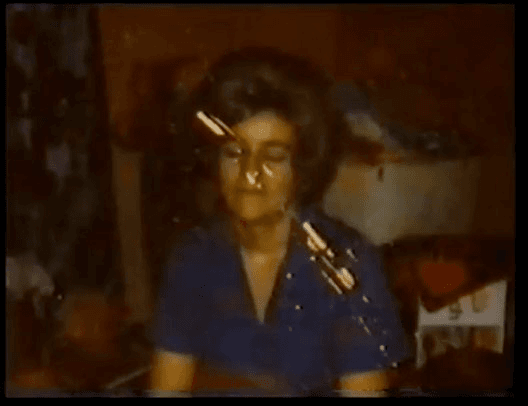
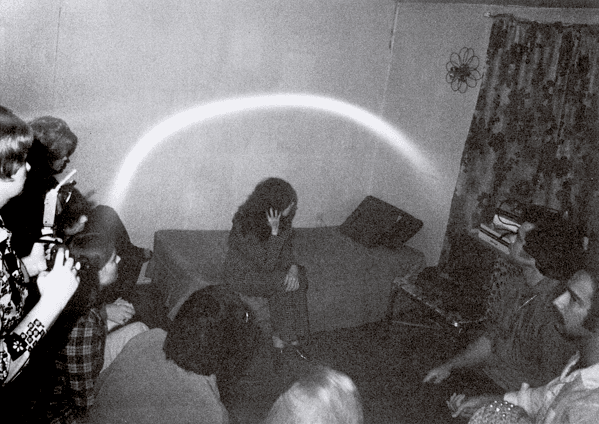
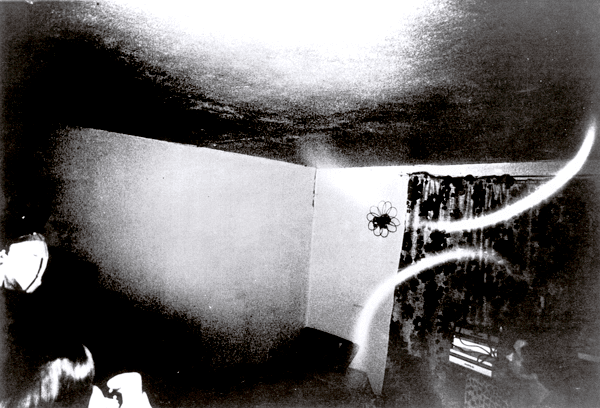
The only sources of photos from The Entity case are online. This is problematic for research because forensic examination of photos from that era requires that you possess the original negatives. Or in the case of Polaroids, that you possess the original photo. In addition to that, the expertise surrounding these cameras is nearly gone. At the time of the investigation, there were experts who used these cameras regularly and were familiar with their quirks, strengths and limitations in a way that no present – day hobbyist can possibly match.
It’s not a case, in other words, that lends itself to easy re-examination, let alone drawing new conclusions. Any such attempt should be met with extreme skepticism. You have to evaluate the case according to the era in which it took place. Radford was four at the time. (I was fifteen.)
Doris Bither
The Entity case centered around Doris Bither, a woman who was living in Culver City, CA, in a small, rundown house with her three sons. The movie and the sensationalism surrounding the case involved her unsubstantiated claim to have been raped by three ghosts. When Dr Taff was first approached with this story, he dismissed it as fantasy and as he put it to me: “When people lie about paranormal phenomena, they tend to be whoppers.” He only followed up on the case after neighbors of Bither reported unusual things happening next door.
Doris Bither'’s friend Candy (taken by Kerry Gaynor)
This article is focused on the skeptical reconning of The Entity case and Radford’s portrayal of Dr Barry Taff as an opportunist exploiting a mentally vulnerable woman and doing shoddy work that he then promoted as proof that something paranormal was happening.
Before I get into the details of what is wrong with this attempt to re-write the history of a decades old poltergeist case, it’s important to understand why Radford would go to the trouble of smearing the name of a septuagenarian about a case that happened well before Radford even learned to read.
100% Certainty of Denial
Radford is deputy editor for the Skeptical Inquirer and research fellow for the Center for Inquiry, which is part of the Committee for Skeptical Inquiry, which used to be known as the Committee for Skeptical Investigations of Claims of the Paranormal.
It’s an organization built around complete denial of the paranormal as well as actively opposing pretty much every type of holistic medicine you care to name, whether it’s a crusade against chiropractors, or an assault on acupuncture. They have even declared war on Santa Claus. This weird mindset is reflected in Radford’s work.
His bio on the Center for Inquiry describes him as “one of the world’s few science-based paranormal investigators.” That’s a bit of a whopper. His efforts do not compare favorably with actual scientists studying these phenomena. World renowned Dr Barry Taff, PhD, for instance, has done 4,579 investigations over 50 years. Lloyd Auerbach, M.S. in parapsychology, has done field work for 32 years and has affiliations with numerous scientific organizations and presents his cases at scientific conferences. Dr William Roll was also active in several scientific organizations, spent 20 years working on investigations and wrote many scientific papers on the subject.
Real Research Similar to “The Entity”
Poltergeist cases, such as The Entity are extremely rare. True scientific research involves following up on hundreds or in Dr Taff’s case, thousands of leads, most of which are dead ends. They are often time – consuming and boring, where researchers unsuccessfully attempt to get phenomena to occur. As Dr Taff put it,
“If poltergeist phenomena were completely fictional, we would have nothing to talk about. If it were completely common, we would also have nothing to talk about.”
It’s only because it’s very difficult, but not entirely impossible to investigate, that there is room for discussion and controversy.
If you’re curious about the actual science of poltergeists, here is a relatively short document that will get you up to date on the real research.
Because Radford has never found anything paranormal to the best of my knowledge, he has learned nothing of the phenomena and has nothing of interest to report from his own investigations. He’s not affiliated with any organizations that take the phenomena seriously nor has he advanced the field in any way. His only goal appears to be debunking all of it and painting everyone involved as either deluded or opportunists.
Conclusions Before Research
I have little doubt that his mind was made up well before he did any research. With the Skeptical Inquirer, it was undoubtedly just a question of what negative spin to put on TheEntity case, not whether it was a good idea.
It is so predictable that the moment I knew that the Skeptical Inquirer article existed, I was 99.9% certain that it would be negative. Getting the opinions of atheist materialists about a subject with obvious spiritual implications is like asking Christian evangelicals about evolution. You are not going to get an objective review.
Radford’s article mostly takes the facts of The Entity case and then interprets them in the most negative way possible. It gives him the cover of not lying, while presenting his own beliefs as objective analysis.
A Haunted Woman
He first paints Bither as a troubled woman. That’s correct. He also paints her as an alcoholic and drug user. There seems to be a bit of debate on that point, coming from her middle son, but as she did drink and use drugs — it’s a matter of how much. Radford sets up his point that:
“the introduction of psychics, paranormal investigators, and other self-styled ghost hunters escalated—and arguably exacerbated—Bither’s situation. Where a trained psychologist or social worker might have seen a troubled woman needing help, Taff and Gaynor saw a golden opportunity to research a real haunting.”
I suppose that if you believe that none of it is real and that these investigations just prey on vulnerable people and exploit them, then Radford’s speculations might make sense. But when the phenomena are real, as was obviously the case, then it’s an entirely different story.
Bither reached out to Dr Barry Taff because she needed someone to take her seriously, and she found one of the few people who were familiar with this extremely rare situation and would handle it professionally. She needed someone to say “you’re not crazy, this is really happening.” According to Dr Taff, she turned down requests for her to seek medical assistance anyway.
Image: Canva
Fear of Being Labeled Crazy?
And that may have been due to her very legitimate fear of being labeled as a crazy person. I wasn’t there and I don’t know for sure, but it would be consistent with other people I’ve encountered. Relying on medical professionals when it comes to the paranormal can be a huge gamble. At the very least they can assume you’re spinning a tale and at the worst they can assume that you’re having a psychotic episode and involuntarily commit you.
There are very few safe people to turn to and Dr Taff was one of them. Radford’s conclusion here is based on his ignorance of what people actually go through when they experience extreme paranormal phenomena. So, on to the next thing.
Why did Dr Taff introduce seances? If you are going to observe the phenomena, you can either wait around in the hope that it randomly happens or you can try to trigger it. For The Entity case, Dr Taff chose the latter course. It’s something Radford would know if he had any familiarity with the subject.
The Omnipotent Skeptic
Radford didn’t have access to the original notes, yet he felt confident in saying that the case “was never competently investigated” as though he had some supernatural power of Omnipotent Skeptical Insight.™
And how about this gem: “There is curiously little independent corroboration of the allegedly extraordinary events, and we are forced to rely extensively (if not exclusively) on secondary sources.” Yeah, that happens after 47 years. Not only was there no Internet back then, the personal computer had only just been invented. A lot of people involved have either died or tracking them down is not worth the effort.
According to Radford, “Taff is still capitalizing on his involvement in the famous case through media interviews and books.” That’s news to me. Taff wrote one book and the case is one chapter of it. The media interviews about the case are long gone and in fact, he’s been on the brink of homelessness due to medical issues and accrued debt from not being able to work, barely surviving financially on social security and relying on charity and housing assistance.
Skeptic Doesn’t Know What “Documented” Means
Radford then moves on to write: “. . . had many of the phenomena typically associated with ghost reports: cold spots; odd, subjective sensations; a bad smell; and so on. The pair claimed to have experienced some unexplained phenomena, for example, “suddenly the cabinet door swung open. A frying pan flew out of the cabinet, following a curved path to the floor over 2.5 feet away, hitting with quite a thud.” Sadly and predictably, none of this was documented.”
“Sadly.” It’s one of those words that skeptics overuse to profess their fake disappointment that something didn’t live up to their Obviously Superior Skeptical Standards.™ Radford’s claim that none of this was documented is rather idiotic in my opinion. Of course, it was documented. Taff wrote down what happened. That’s how Radford knows about it. It. Was. Documented.
Otherwise, what on earth does Radford expect from Dr Taff? In 1974, the technology wasn’t there to film everything continuously. Capturing any photo at all is one of the more remarkable things about the case. The criticism is complete nonsense. In addition to that, this is an investigation, not an experimental trial. Investigations are about writing up observations and providing other types of documentation when possible. That’s exactly what Dr Taff did.
Scientific vs. Debunking
This is where scientifically minded people diverge from debunking skeptics like Radford. If you are going to seriously evaluate this report of poltergeist activity, you compare it to other poltergeist reports. The skeptical conceit that investigative researchers like Dr Barry Taff must either be lying or deluded is not how you do science, it’s just emotionally charged bias.
Records of poltergeist cases go as far back as 530 AD with more complete documentation dating back as far as 1526, in a monastery in France. Perhaps since Radford is so fond of old cases he can criticize the reporting of the nuns who lived 700 years ago.
It’s an incredibly rare phenomenon, but the other side of this is that it’s so remarkable that when it happened, people documented it. And we have enough of those cases throughout history that we can see similarities in the reports.
There is only so much evidence that you can dismiss as insane before the dismissal itself becomes the insanity.
If you are going to go about this scientifically, you should measure this case against all the others and add it to the database if it seems reasonable by those standards. The Entity certainly falls within the boundaries of other poltergeist cases and that’s how it should be judged.
Bad Photo Examination
In a separate article, a skeptic photography hobbyist, Kenny Biddle, criticizes the photos. The Entity photos were vetted by an expert of the time, Adrian Vance, editor of the West Coast edition of Popular Photography. In keeping with the skeptic tradition of interpreting everything in the worst way possible, he uses a quote from Vance and turns it on its head.
“As for Vance giving his opinion on whether the photo shows an apparition, he merely writes, “it now appears (to them) that they had some success” (Vance 1976). This does not appear to be an enthusiastic endorsement of the photo’s authenticity as depicting some unknown energy.”
It was the photographer’s job to merely rule out artifacts as an explanation, not vet the pictures as paranormal. And that’s exactly what he did. And our skeptical hobbyist goes on to criticize the original photos because the poster board wasn’t up. He got his timeline wrong. The poster board came later after Dr Taff and others realized that there was something to photograph. It’s another pointless and inaccurate criticism.
Maybe Pay More Attention?
And he goes on to compare this:
To this:
And forgets to include this:
The images look nothing alike. The hair artifact in the first picture isn’t uniformly illuminated like in The Entity pictures and it has well-defined edges, which the entity anomalies do not. In the second picture, the light is interacting with the curtain and there are two of them. It makes the claim of hair outright impossible.
Another thing I’d like to point out is that the aspect ratio of that picture is different from an SX-70; the photo is overexposed and the hair looks like a digital artifact. The picture could have been cropped, but it seems to be digital. I am not certain of this, but if that’s the case, then this is an outright dishonest comparison.
When Skeptics Attack
So there you have it. Bad skepticism. A couple of guys with no feel for the subject or any clue as to how to properly assess a poltergeist investigation have taken a decades old case launched into an over-the-top biased assessment of it. Sadly, (see what I did there?) all Radford and Biddle have shown is ignorance and bias.
In much of the research conducted into mediumship practices and as indicated in my recent book "Deadly Departed," the reality of spiritual gifts within the Catholic Church has been in existence all along. They are just too ignorant to admit it. As a consequence of the ignorance of real knowledge from the hierarchy to the lower levels of the church, and of its lay ministry; there is a complete disregard of the gifts of the spirit and how they are bestowed, employed and developed within an individual.
Searching the Internet can uncover some clear distinctions and lack of understanding within the church system and its holy orders. Perhaps the worst aspect of its teaching is the complete misunderstanding of the reality of the gifts of the spirit. Compounding matters is the understanding the reality of what the occult is and how it operates.
Occult
One of the greatest misconceptions of the Catholic church, and most other religions that are based in dogma, is the clarity of what the Occult seems to be and how it is labeled. The Occult comes from the Latin 'Occultus,' which means hidden knowledge it is "knowledge of the hidden" or "knowledge of the paranormal". There is, of course, a stark contrast to spiritual gifts as you will see, and although there are crossed links, you will recognize the almost two faces of the church.
My child, regard not omens, for this leads to idolatry; neither be an enchanter, nor an astrologer, nor a magician, neither wish to see these things, for from them all is idolatry engendered. [Didache]
The reality of the above statement is quite clear, but looking deeper, one can deduct that the practices mentioned above are not those of mediumship. In fact, they are quite the opposite. The practices are tantamount to occult practices of which mediumship has no real place. As mentioned before, mediums use spiritual faculties and do not conjure, using oracles, divination or ritualistic magic such as witchcraft.
Church Teachings
The church teaches that anything that is out of its remit is tantamount to a mortal sin or evil. According to early teachings found in various texts, it was forbidden to seek seers, divine information, visit oracles and so much more. However, this is really from a place of ignorance and control rather than the reality of the dangers of hidden knowledge. Church laws and teachings change over time and one only needs to refer to the "Didache" to get the unabridged meaning of the gifts of spirit and the warnings according to the disciples of Jesus that was before the church. The Didache was the teachings of the apostles, the rules, if you like, of early christianity.
Divination and Conjuring
What is abundantly clear is that divination and conjuring according to the belief's of religious text are considered the opposite to spiritual gifts because of the methodology behind these practices. Perhaps this has some merit and one has to seriously look toward occult practices such as magic to realize there is a clear division between these practices and what the gifts of the spirit are considered to be and how they are employed in spirit communication and discernment.
Practices frowned upon in the search within the afterlife
The gifts of the spirit are basis of all life and as such every man and woman has a facet of these gifts dormant within. However, one may be more imbued within than another and so the gifts are stronger in some individuals.
Practices of afterlife research may be the aspects that a church or dogmatic faith may frown upon and include;
ITC
EVP
SCRYING
SEANCES
AUTOMATIC WRITING
PRECIPITATION
DIVINATION TOOLS
Mediumship Practices Misunderstood – Not Only By The Church.
Anyone who understands the mechanics of mediumship recognizes that no conjuring actually takes place whatsoever. As mediums we do not conjure, we do not call upon spirits and we certainly do not divine spirits. In this respect there is a clear misrepresentation of who and what real mediums are, and how we attune our craft. The reality is there is no pomp and circumstance. One who has developed gifts of the spirit merely uses these spiritual faculties to open up to the real vibratory spiritual nature of those on the other side.
A look into the new testament of the Holy Bible can deduct these spiritual gifts being used in service to humanity throughout its text and of course not restricted to Jesus Christ, but to others in service.
Apostolate
The Holy See, for many years, has condemned mediumship practices. Those who visit mediums and mediums themselves are labeled as being lured by evil nefarious forces. However, there is a bit of conjecture here in that the church, the pope, has actually gone so far as to accept those with spiritual gifts, but only if they are catholics. A bit two faced there I feel! Nevertheless, in the following church document that was released in 2017, and only for Bishops – lay's out the urge for the Catholic leaders to accept those with spiritual gifts who are in service to the church, the people and of course – Catholic.
Vatican News Is Quietly Held
Whilst, the document is very substantial; it does, in certain parts, urge the church leaders to accept those whom have developed these gifts.
Gifts given “for the good of all” and the primacy of charity
5. In 1 Cor 12:7 Paul declares that “To each individual the manifestation of the Spirit is givenfor some benefit”. Many translations add “for the benefit of all” because the majority of charisms mentioned by the Apostle, even if not all, are directly for the benefit of all. This orientation toward the edification of all has been well understood, for example, by St. Basil the Great, when he says: “These gifts are received by each one more for others than for themselves […]. In the common life it is necessary that the power of the Holy Spirit, given to one, be transmitted to all. The one who lives for oneself, may have a charism, but it remains useless, hidden away inactive, because it remains buried within the self”.[15] Paul, nevertheless, does not deny that a charism may be useful solely for the person who has received it. Such is the case with speaking in tongues, which, in this respect, is different from the gift of prophecy.[16] The charisms that have a common usefulness, be they charisms of the word (of wisdom, of knowledge, of prophecy, of exhortation) or of action (of powers, of ministry, of governance); they also have a personal usefulness, because their service of the common good favors the growth of charity in those who possess them. Paul observes, regarding this, that, if one lacks charity, even the highest charisms do not help their recipient (cf. 1 Cor 13:1-3). A stern passage from the Gospel of Matthew (Mt 7:22-23) expresses the same reality: the exercise of the more visible charisms (prophecy, exorcisms, miracles) can unfortunately coexist with the absence of an authentic relationship with the Savior. Consequently, Peter as much as Paul insists on the necessity of directing all of the charisms towards charity. Peter offers a general rule: “As each one has received a gift, use it to serve one another as good stewards of God’s varied grace” (1 Pt 4:10). Paul is concerned in particular about the use of the charisms in gatherings of the Christian community and says: “Everything should be done for building up” (1 Cor 14:26).
We can deduce from the above excerpt that a clear division exists and that division is an accepted facet of those spiritual gifts as bestowed upon all, but perhaps stronger in one than another. No where, does it mention, divination, conjuring or oracles. Looking between the lines, you can clearly discern the reality of mediumship with all its faculties.
Is this a small step forward or do we still stand in a stalemate position according to the church? who knows, however, in my mind, it means that a small glimmer of light is shining somewhere with dogmatic practices and the need for education between spiritual gifts, its mechanics and understanding of spiritual practices is needed more than ever.
Almost every person on the planet knows a great ghost story. And while you believe in ghosts or not, there are certainly some stories that are remembered for generations. From time to time, people claim to have seen a ghost and even captured it on camera. But which are the most prolific and famous ghost sightings in human history? Paranormal Daily News went delving for the truth and came up with the best ghost sightings that will send some shivers across your spine.
Ghost Sightings
1. The Ghosts Of The Fairmont Banff Springs Hotel
The Fairmont Banff Springs Hotel is Canada was originally built in 1888. The hotel was meant to attract tourists and look over the Rocky Mountains of the Banff National Park. While the hotel may look unremarkable to some, the hotel has been a prime location for ghost sightings for many years.
When you have the privilege of visiting the hotel, you may encounter two famous ghosts in the form of “The Bride” and “Sam the Bellman”. Local legend claims that the bride ghost fell down the stairs on her wedding day in the 1920s. The fall killed the bride, but her ghost allegedly remains. People have seen The Bride in the upstairs ballroom and on the staircase of the hotel on a regular basis.
Sam, Bellman’s story is a little less tragic. According to local stories, Sam was a bellman at the hotel during the sixties and seventies. When he died, his spirit started roaming the halls. Guests claim that the helpful ghost provided a service to them, with two elderly women claiming their door was opened by Sam after they forgot their key.
2. Eastern State Penitentiary
If you’re aren’t up for international travel to spot some ghosts, no need to worry! The Eastern State Penitentiary in Philadelphia is a hotspot for ghost sightings. Visitors claim to have heard and seen various paranormal goings-on, this goes from laughter and footsteps to shadow figures.
The reason for the hotbed of paranormal activity is pretty obvious considering the rather cruel history of the penitentiary. The prison was built in 1829 and put all prisoners in extreme confinement, which meant living alone at all times. Some forms of punishment included chaining an inmate’s tongue to their wrists. Many inmates are believed to have died a horrible death at the penitentiary before it was permanently closed in 1970.
3. Chateau de Brissac
When mentioning the top 10 ghost sightings in human history, we cannot forget about the Green Lady. The Green Lady haunts Chateau de Brissac in France. She is believed to be the ghost of Charlotte of France, an illegitimate daughter of King Charles VII.
Legend says that Charlotte of France was brutally murdered by her husband for having an affair. At the time she was killed, Charlotte wore a green dress. Since multiple visitors have reported a woman wearing a green dress in the tower room, the link with Charlotte of France is easily made.
4. The Stanley Hotel
The Stanley Hotel is known around the world for many reasons. Firstly, Stephen King used the hotel as an inspiration for the Overlook Hotel, which is featured in The Shining. Of course, the inspiration was not just the location, but also the many ghost sightings attributed to the Stanley Hotel over the years.
Several ghosts have been spotted by visitors over the years. The most prominent is that of inventor Freelan Oscar Stanley, who vowed to build the hotel’s reputation after a stay in the region helped him combat tuberculosis. Stanley arrived in 1903 and opened the hotel in 1909. He would eventually die in 1940 at the age of 91. Guests have spotted his ghost in the billiard’s room and the hotel bar.
Piano music can often be heard by guests as well, which seems to come out of nowhere. Witnesses claim that the piano is played by Stanley’s wife Flora. She allegedly roams the entire hotel but shows a clear preference for the piano.
And there are even more ghosts if you know where to look! In addition to Stanley and Flora, there is the ghost of Elizabeth Wilson in room 217. Elizabeth does not like unmarried couples though, so you might not want to stay in 217 if you’re unmarried and traveling with a partner.
Guests also regularly hear noises, which are often described as children playing. From a little girl to little boy ghosts, there are plenty of ghost sightings to go around at the Stanley Hotel.
5. La Recoleta Cemetery
While you would expect to find many ghost sightings at a cemetery, you will find that most cemeteries are remarkably peaceful. Of course, this is not the case for all cemeteries because La Recoleta Cemetery has made our list of top ghost sightings in history.
La Recoleta Cemetery is the home of thousands of graves, featuring beautiful mausoleums, tombstones and even the remains of the famous Eva Perón. Of course, this cemetery also has its fair share of hauntings, making it an attractive spot for anyone who wants to see a ghost.
While there are many ghosts that allegedly haunt La Recoleta Cemetery, the best-known ghost on the cemetery ground is that of David Alleno. Alleno was a caretaker on the cemetery, a duty he performed for more than thirty years. Unfortunately, David Alleno took his own life.
The story of David Alleno is tragic, to say the least. However, locals believe David returned as a ghost and is still roaming the paths in the cemetery. Visitors claim to have seen him and even heard the sound of jangling keys before he disappeared. While his story is only known by those who are proficient at visiting locations where ghosts were sighted, the cemetery is well worth visiting by anyone who wants a chance of seeing a ghost.
Why We Decided On These Locations
You may wonder, why did we choose ghost sightings in these particular locations? Well, we went with a number of sightings and statements by visitors who claim to have seen ghosts. While you may believe the Winchester House or other locations give you a fairer chance, we would not rule out the locations in this overview of top ghost sightings in history. Since many visitors have their own stories to tell about these locations, maybe you will too?